Day plan
Sagres Fortress and Cape St Vincent in one day
Two sites six kilometres apart on the same corner of Portugal: what each one is, the order that works, lunch, the sunset, and how to do it without a car.
Check dates for the Lagos half-day tour ↗Quick answer
Yes, and comfortably. The fortress and Cabo de São Vicente stand about 6 km apart at the south-western corner of the Algarve. Give the fortress one to two hours and the cape about an hour, and both fit in a half day. Add lunch in Sagres and a beach and you have a full one. Fortress entry is paid; the cape headland is open air and free.
Two different places on one corner of Europe
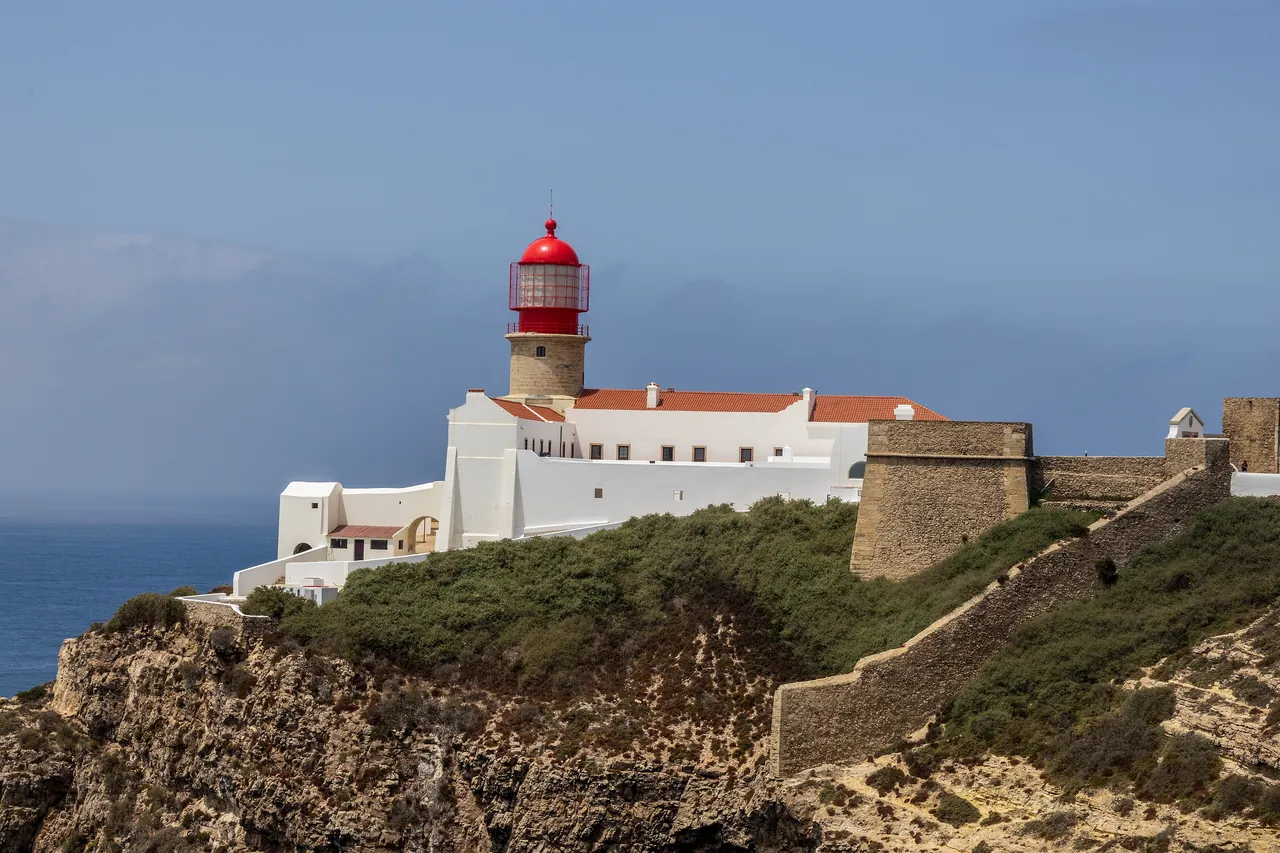
People often mix them up, so start here. The Fortaleza de Sagres stands on Ponta de Sagres, a flat promontory about a kilometre long ringed by cliffs some 40 metres high, with a bastioned wall across its land side. It is a historic monument with an entry charge, looked after by Museus e Monumentos de Portugal. Cabo de São Vicente, about 6 km to the west, is the south-westernmost point of mainland Portugal and of mainland Europe. Its cliffs rise almost straight out of the Atlantic to about 75 metres, and its lighthouse was built in 1846 over the ruins of a 16th-century Franciscan convent. Wikipedia counts it among the most powerful lighthouses in Europe. One is a story about Henry the Navigator and the voyages; the other is a landmark that ships have steered by for centuries. Seeing both is what makes the trip west worth it.
The day at a glance
This plan assumes a car or a driver, a start from Lagos and a day between spring and autumn. Times are approximate and leave room for parking and a slow lunch.
A one-day plan for Sagres and the cape
| When | Where | Why then |
|---|---|---|
| Morning, from opening at 9:30 | Sagres Fortress | Fewer people on the headland and softer light on the cliffs |
| Late morning | Out to the point and back | The walk is open ground, so do it before the midday sun |
| Lunch | Sagres village or the harbour at Baleeira | It is on the way and a short drive from both sites |
| Afternoon | A beach on the road to the cape | A break from the wind on the sheltered side |
| Late afternoon to sunset | Cabo de São Vicente | The cape faces open ocean to the west |
Start at the fortress
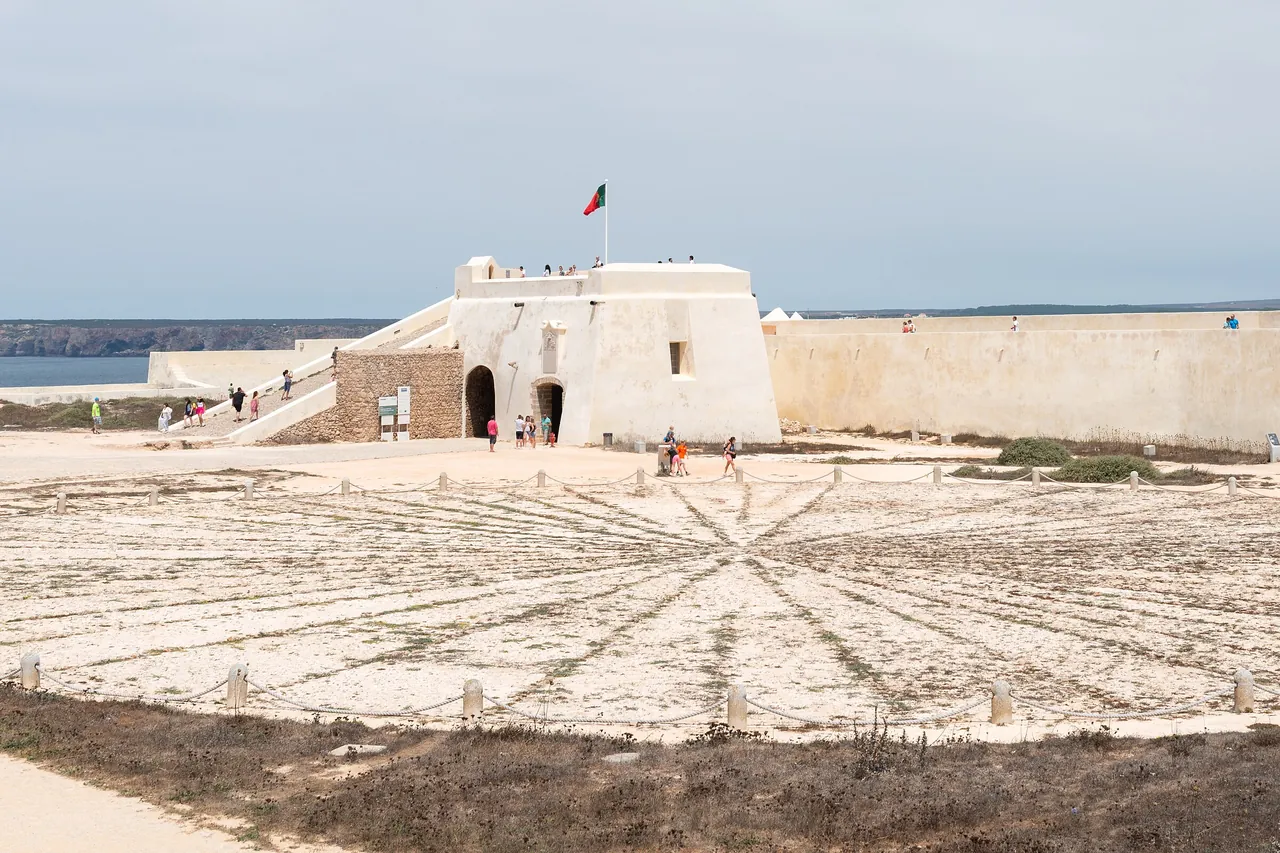
Go to the fortress first. It is the place with opening hours, a ticket desk and a closing time, and in winter it shuts in the late afternoon, well before sunset. You pass through the bastioned land front into a wide open space. Head first to the wind rose, the big circle of stones near the gate, then the little whitewashed church of Nossa Senhora da Graça. The exhibition centre in the Correnteza row tells the story of the voyages and has space for contemporary art. Then walk out across the headland to the point and the small lighthouse. Travel writers suggest at least an hour on the headland; two is more relaxed if you stop at the exhibition. Children under 12 enter free with an adult, and residents of Portugal can use one of their 52 free days a year.
Read next: Visiting Sagres Fortress: a practical guide
Lunch in Sagres
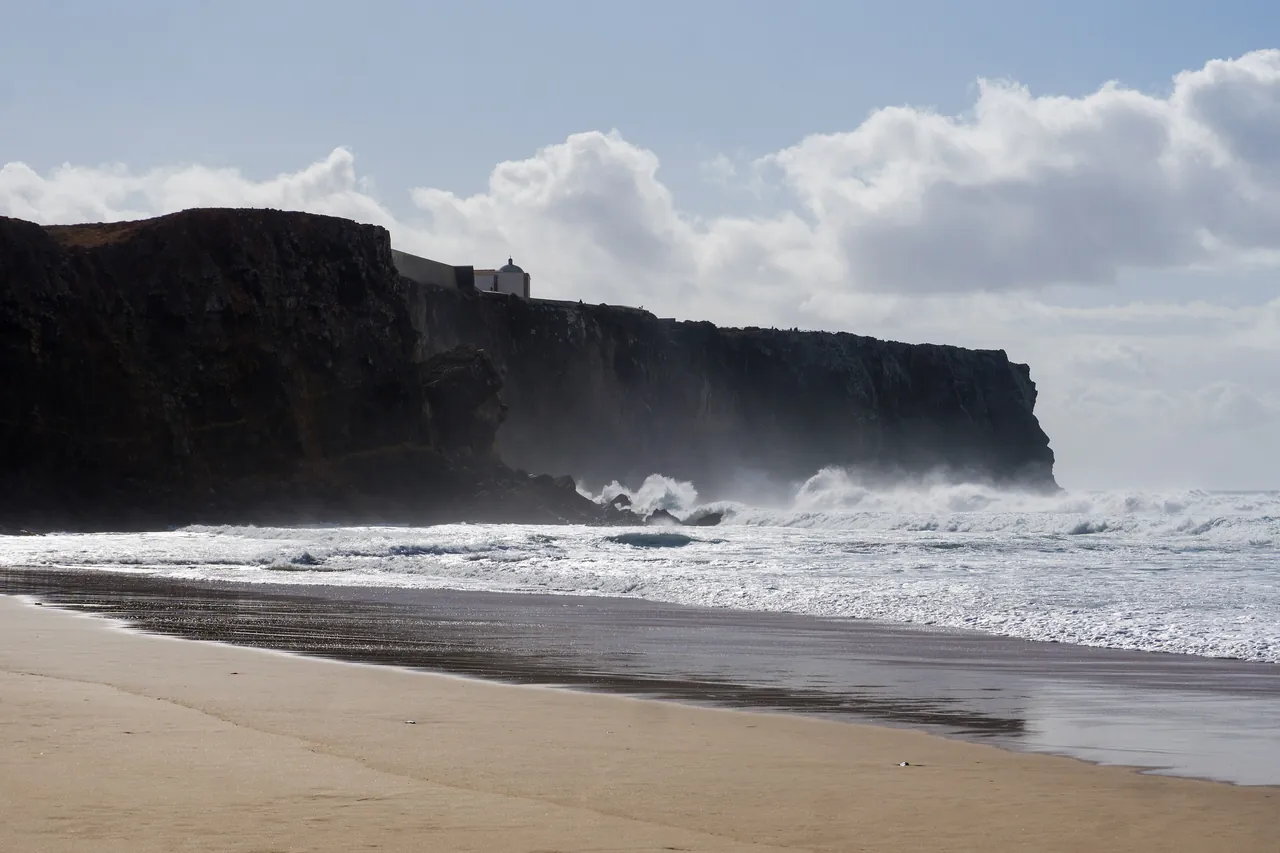
Sagres village sits just north of the fortress, between the headland and the harbour at Baleeira, where fishing boats and the dolphin-watching trips go out. It is a small place, so you will not have to drive far. Eat here rather than at the cape, where the choice is limited to what is set up near the car park. If you are travelling in high summer, expect the village to be busy at lunchtime and plan a little earlier or later. This is also the moment to check the wind: on a calm day the boat trips run, and an afternoon on the water is an easy swap for the beach.
The road to the cape
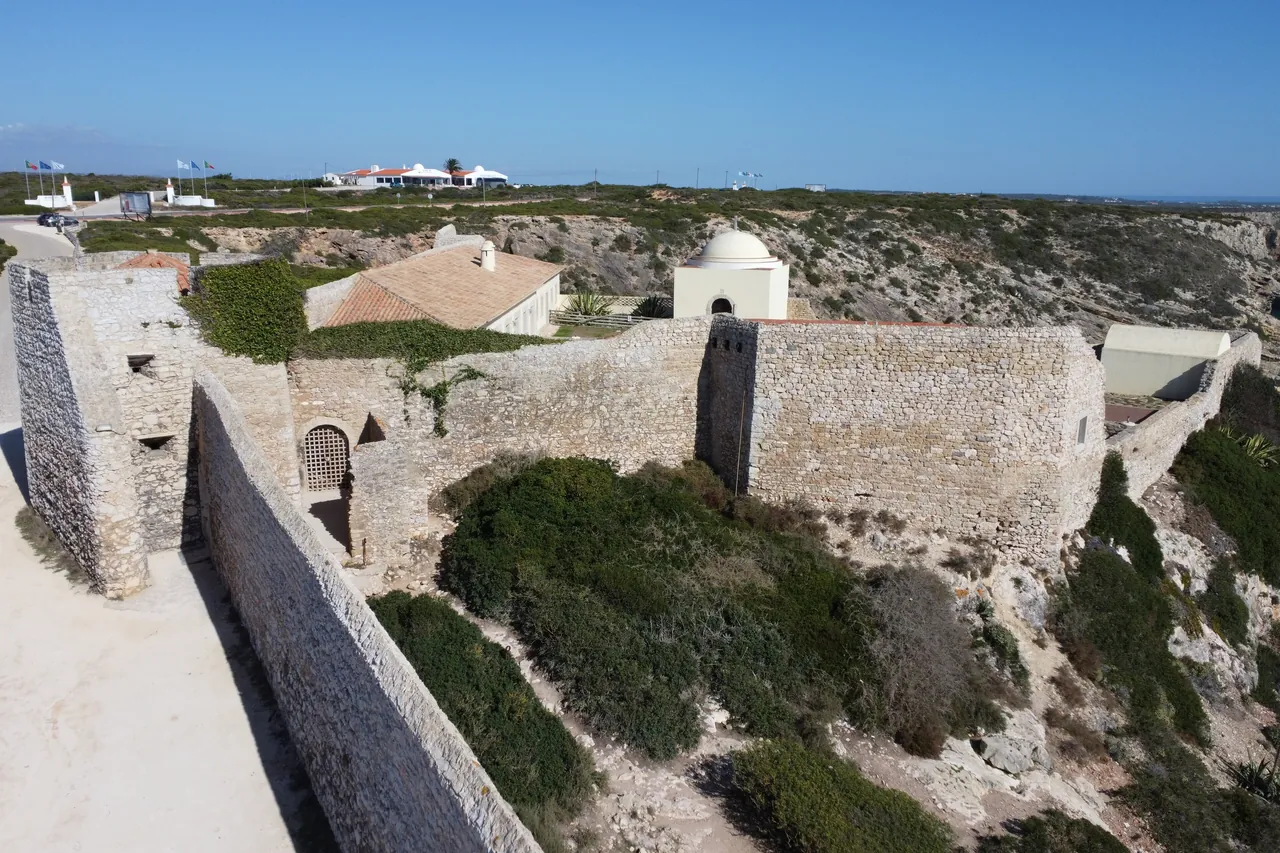
From Sagres the road runs west across a flat, open plateau for about 6 km to the cape. Halfway along, the Fortaleza do Beliche sits above the sea. It was one of two smaller forts, with São Vicente, that supported Sagres in guarding this coast. Below it lies Praia do Beliche, a beach where Roman remains have been found nearby. On a hot afternoon a beach here makes a good break, as the south-facing coves around Sagres are more sheltered than the cliffs. Drivers will find the road straightforward; walkers can follow the cliffs, but the plateau is exposed, there is no shade, and the round trip is long. Most people drive or take the tour.
At the cape
The cape headland is open air, free and open at all hours. The lighthouse compound is another matter: a Portuguese news report in 2023 said the lighthouse was closed to visitors for works, and later reports in 2026 still described it as closed, with no reopening date. So plan on walking the cliffs and viewpoints outside the walls rather than going in. This was sacred ground long before the lighthouse. The Romans called it Promontorium Sacrum, the Sacred Promontory, and the Greek geographer Strabo described it as the westernmost point of the known world. Later tradition holds that the body of the martyr Saint Vincent was brought ashore here and that ravens guarded his shrine, until his relics were taken to Lisbon in 1173.
A cape of sea battles
Every ship between northern Europe and the Mediterranean rounds this corner, which is why so many fleets have met off it. Wikipedia lists more than ten battles fought off Cape St Vincent between 1337 and 1833, the best known in English being the British victory over a Spanish fleet in 1797. Stand on the cliffs and you are looking at one of the busiest shipping lanes in the world, which is what the lighthouse was built to guard.
Sunset at the cape
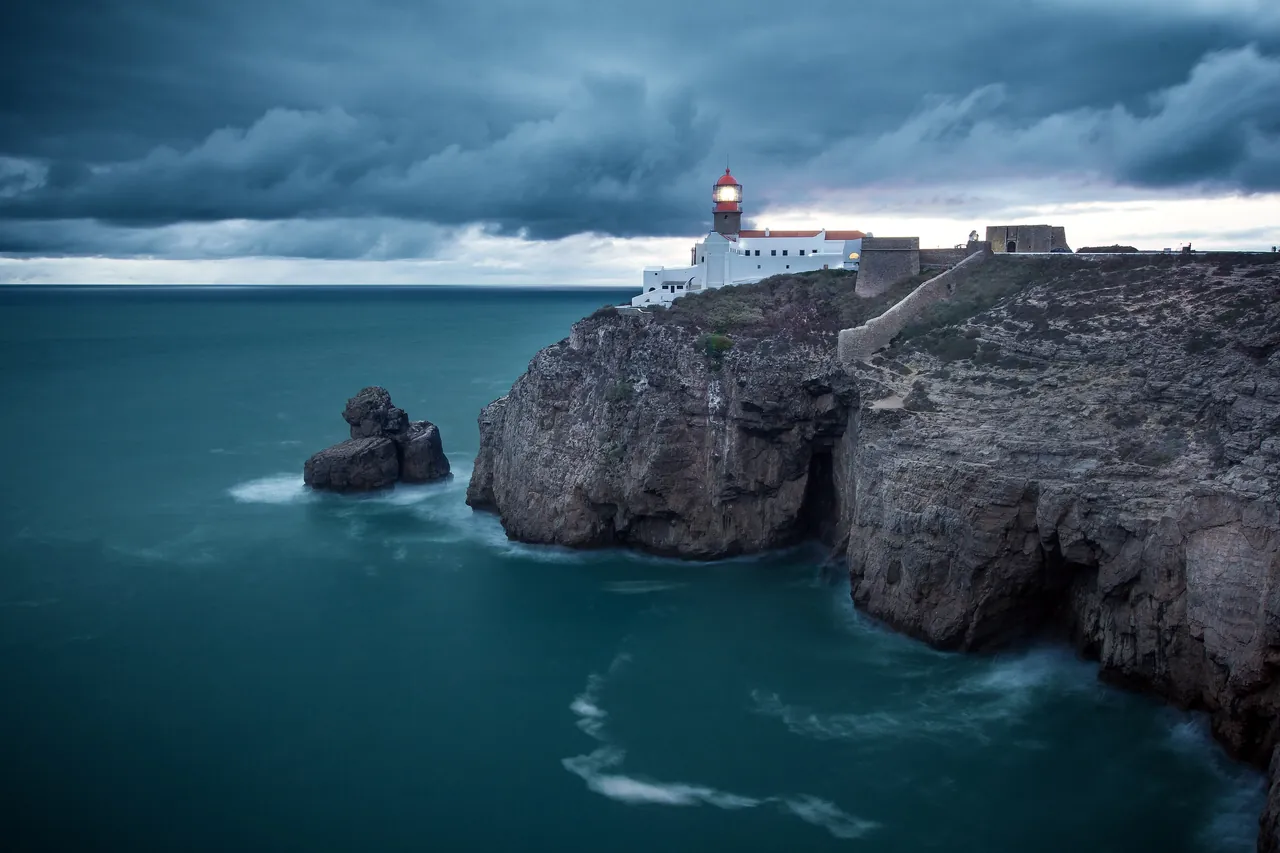
With nothing to the west but ocean, the cape is where most people watch the sun go down, and the car park and viewpoints get crowded in summer. Arrive with time to spare and bring a warm layer: even in August the wind on the cape can feel cold once the sun drops. The cliffs are high and largely unfenced, so stay on the paths and keep children close. After sunset, the drive back to Lagos is about 40 minutes, and the road is dark once you leave Sagres.
If you only have half a day
Cut the beach and the long lunch, not the sites. Arrive at the fortress at opening, give it about 90 minutes, then drive straight to the cape and spend 45 minutes on the headland and the viewpoints. You will be back in Lagos by early afternoon. In the other direction, an afternoon version can work in summer, when Wikipedia gives a later closing time: fortress from mid-afternoon, then the cape at sunset. In winter the fortress closes too early for that, so keep to the morning.
With children
Children under 12 enter the fortress free with an adult, and the open ground suits them: the wind rose is a giant puzzle to walk round, and the cannon on the batteries are a draw. The danger is the edges. The cliffs here are high and in many places have no railing, and the wind can gust hard, so hold small hands near the edge and agree a meeting point. Bring snacks and water, as there is little shade. The half-day tour from Lagos does not take children under 6.
What to bring
A windproof layer in every season, sunglasses, a hat and sun cream from spring to autumn, and water. Wear shoes with grip, as paths run over bare limestone. Binoculars are worth packing in autumn for the migrating birds over the cape. If you plan to stay for sunset, bring something warm for the moment the sun goes down.
Doing it without a car
Vamus bus 47 runs from Lagos bus station to Sagres in about an hour, and the travel site Algarve-Tourist.com says the route carries on to Cabo de São Vicente. Check that your particular departure does, and look up the last bus back before you set off, as weekend services are thinner. Taxis are the fallback from the village. The simplest option is a tour. The half-day trip from Lagos on GetYourGuide picks you up at your hotel, includes Sagres Fortress tickets and a guide in English or Portuguese, and also stops at the cape, all in about three hours, with no more than eight people. A full-day west coast tour from Lagos adds Aljezur and its castle and the beaches of the west coast, with fortress tickets included but lunch at your own cost. A day tour from Albufeira stops at the cape but not at the fortress.
Read next: How to get to Sagres from Lagos and Faro
Which order works best
Fortress first and cape last suits almost everyone, because the fortress closes and the cape does not. Reverse it only if you arrive in the afternoon in summer, when the published closing time is later: then you could see the cape first, visit the fortress, and come back out for sunset. In winter, check the fortress closing time before lunch so you are not caught out. If you only have two hours, choose the fortress for the history and the wind rose, and look at the cape from its walls.
Frequently asked questions
How far is the Sagres Fortress from Cape St Vincent?
About 6 km by road, a drive of around ten minutes. The cape sits west of Sagres village along the same coast.
Is the Cape St Vincent lighthouse included in the fortress ticket?
No. They are separate sites. The cape headland is free, and the lighthouse compound has been reported closed to visitors since 2023.
Can I see both by bus?
Bus 47 from Lagos reaches Sagres in about an hour, and Algarve-Tourist.com says it continues to the cape. Check your departure and the last bus back.
How much time should I allow for both?
Half a day for the two sites alone. A full day if you add lunch, a beach and sunset at the cape.
Does the half-day tour from Lagos go inside the fortress?
Yes. Its listing includes Sagres Fortress tickets and a guide, then a stop at Cabo de São Vicente.
Sources
- Museus e Monumentos de Portugal: Sagres Fortress
- Wikipedia: Fortress of Sagres
- Wikipedia: Cape St. Vincent
- Wikipedia (Portuguese): Farol do Cabo de São Vicente
- The Portugal News: the Cabo de São Vicente lighthouse stays closed to the public (2023)
- Algarve-Tourist.com: Faro Airport to Sagres
- Just Plus Lauren: things to do in Sagres
- GetYourGuide: Sagres and Cape St Vincent half-day tour from Lagos