History
Sagres Fortress history and the Age of Discovery
From the Sacred Promontory of the Romans to Henry's town, Drake's raid, the 1755 earthquake and the restorations that still divide opinion.
Check dates for the Lagos half-day tour ↗Quick answer
Sagres was a sacred headland in antiquity. In 1443 Henry the Navigator was granted the land and founded a town here, and he died here in 1460. Francis Drake sacked the place in 1587, the 1755 earthquake destroyed the walls, and the fortress you see was largely rebuilt from 1793. It became a national monument in 1910.
The Sacred Promontory
The Greek historian Ephorus called this corner of land the Sacred Promontory in the 4th century BC, and Pliny the Elder's Latin name for it was Promontorium Sacrum. People lived nearby from at least the early Neolithic, as finds at Cabranosa, north-west of the village, show. Tradition holds that the martyr Saint Vincent was buried here, and the Arab geographer al-Idrisi described a shrine known as the Church of the Raven. In 1173 the saint's remains were taken to Lisbon.
Henry's town
In October 1443 the crown granted Henry the land around Cape St Vincent for life. He founded Vila do Infante, the Prince's Town, on the promontory, with buildings inside a wall, and in 1459 he created a parish of Santa Maria there. He died in his town on 13 November 1460. Museus e Monumentos de Portugal lists what is thought to survive from that time: traces of a sawtooth wall, a cistern tower, the base of a windbreak wall, and the wind rose, uncovered by accident in 1921.
Read next: Henry the Navigator and the School of Sagres
A fort on the sea road
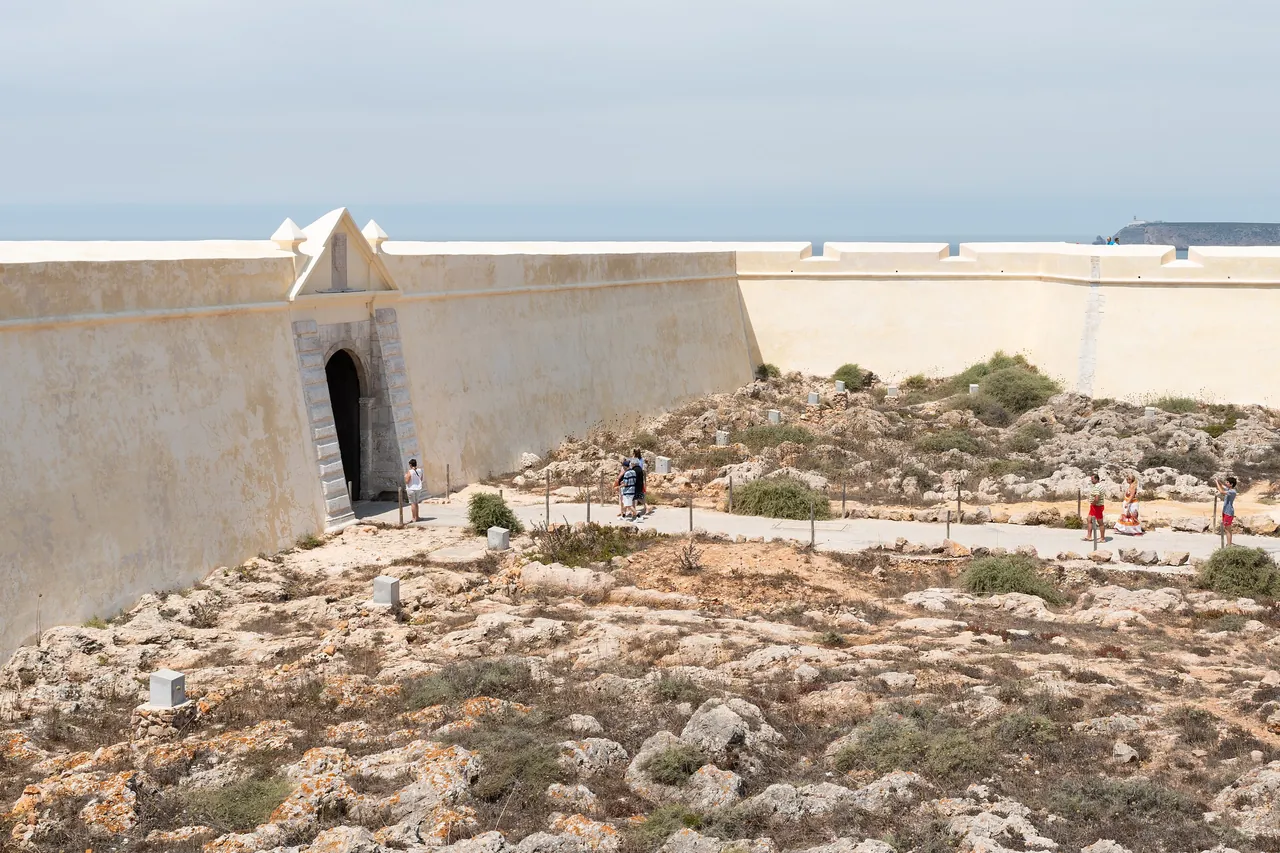
After Henry, the headland guarded both the Algarve coast and the sea route between the Atlantic and the Mediterranean, backed by two smaller forts, Beliche and São Vicente. In 1587 the English privateer Francis Drake raided the coast, sacked the village of Sagres and destroyed much of the fortress. Before the attack the English drew the fortification, and that drawing is probably the oldest picture of it. Repairs were ordered in 1631.
A parish, then a quiet garrison
Sagres was slow to grow. Its people had to travel to Vila do Bispo for church until King Manuel I created a parish here on 12 November 1519 and ordered a parish church built. The church of Nossa Senhora da Graça inside the walls dates back to Henry's time and was first dedicated to Saint Mary. After Portugal regained its independence in 1640, an outer line of fortifications was added on the land side.
Earthquake and rebuilding
The 1755 Lisbon earthquake badly damaged the fortress and destroyed its original walls. Rebuilding began only in 1793, under José de Sande Vasconcelos, who changed the plan of the fortress. The work covered the barracks, the governor's house, the church and the outer wall, and a plaque over the entrance records it.
Monument and myth
By the 19th century the fortress had lost its military role and become a symbol of the Discoveries. It was classified as a national monument on 16 June 1910, and the wind rose came to light in 1921. The Estado Novo regime, which made Henry a national hero, restored the buildings in the 1960s, partly from the 1587 drawing. Critics said the work recreated an old look the buildings may never have had.
Storms and earth tremors
The headland is exposed, and nature keeps returning. An earthquake on 28 February 1969 caused serious damage across the Algarve and at the fortress. A storm in November 2005 damaged the buildings and partly closed the monument, and in 2017 it shut again for repairs after more bad weather. In 2020 the Portuguese Environment Agency included the cliff beside the western bastion in a programme of works to protect monuments from the effects of climate change.
New buildings, new rows
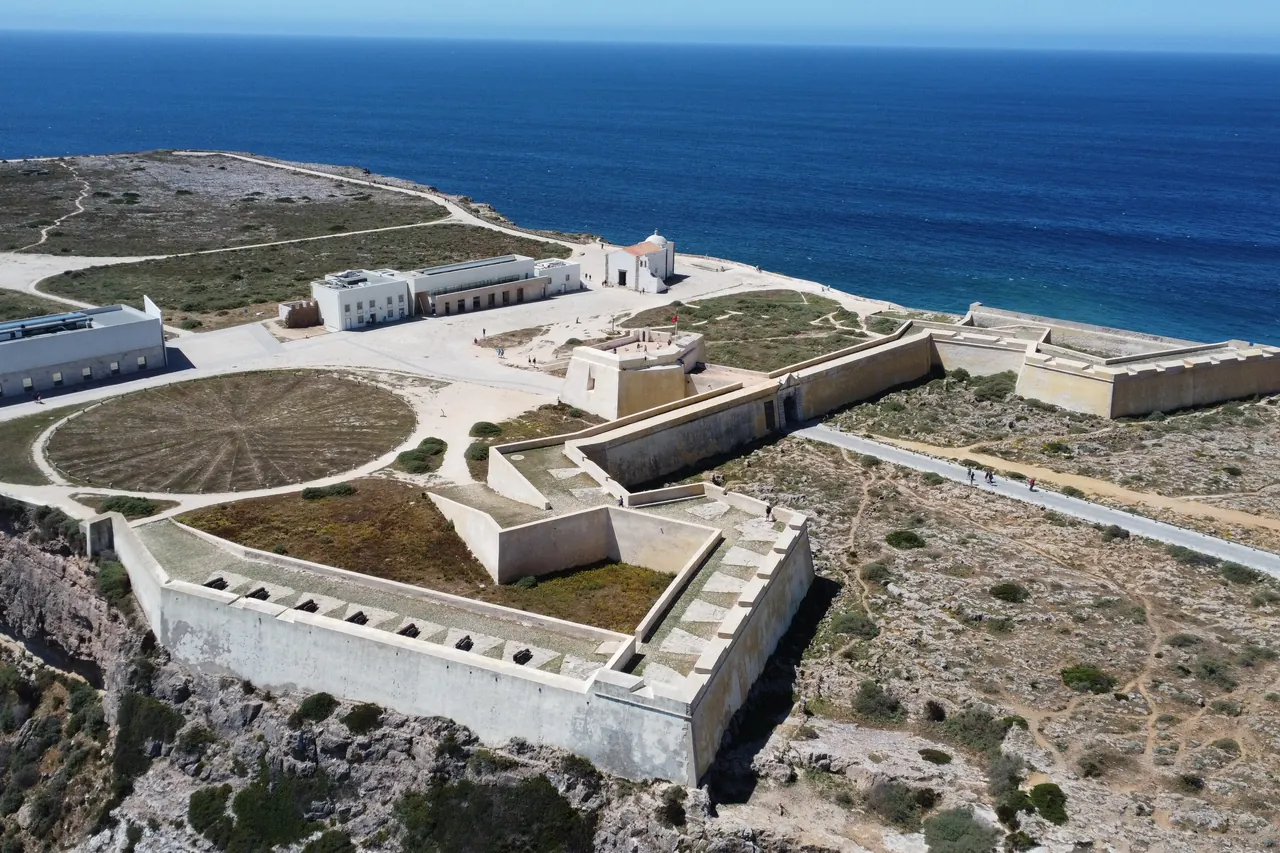
In the 1990s new buildings by the architect João Carreira went up inside the walls, and locals protested at their modern lines. They opened in 1997. In 2015 the monument received the European Heritage Label. An exhibition centre on Portuguese seafaring and contemporary art opened in November 2022. Since 2024 the fortress has been run by Museus e Monumentos de Portugal.
Frequently asked questions
Who built the Sagres Fortress?
Henry the Navigator founded a walled town here after 1443. Most of what stands today was rebuilt from 1793, after the 1755 earthquake.
What happened to Sagres in 1587?
Francis Drake's raid sacked the village and destroyed much of the fortress.
When did the fortress become a national monument?
On 16 June 1910. In 2015 it also received the European Heritage Label.
How old is the wind rose?
Nobody knows for sure. It was uncovered in 1921, and its date and purpose are still debated.
Sources